Flexible District Heating – Great Opportunities for the Future
The project included 150 buildings, totaling around one million square meters, where 22 large owners and several private homes (referred to in the project as "flexumers") allowed their buildings to function as thermal heat storages. This means that heat energy can be charged and discharged from the building mass as needed via intelligent and online heat management. This enables HOFOR to activate 6–8 MW of flexibility, which can shift heat supply and flatten peak loads.
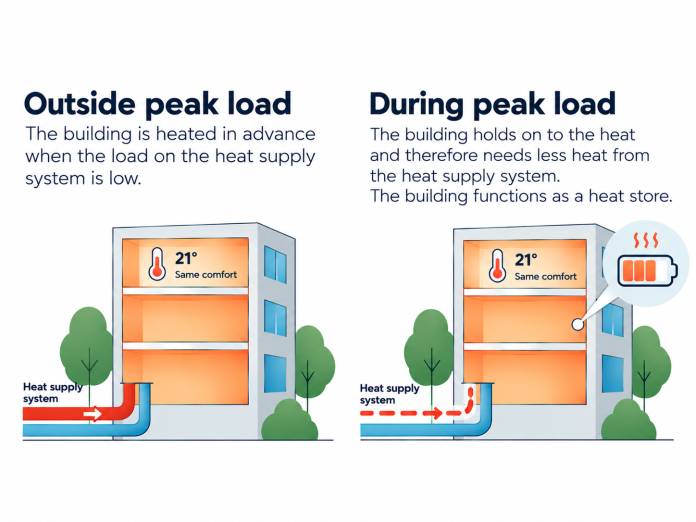
The results show that flexible district heating can optimize daily operations and strengthen supply security. Especially in crisis situations, agreements on interruptible supply with large or strategically placed customers will give HOFOR the ability to make necessary priorities. The experiences are now being used in the further development of the district heating system.
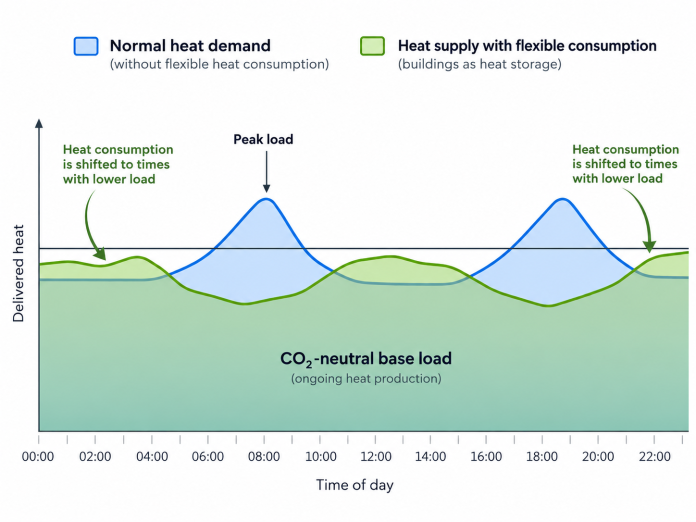
The Value of Flexible Heating
In the Flexumers4Future project, we have documented that flexumers can provide significant system benefits under normal operating conditions and can be used as a crisis management tool to prioritize critical customers, such as hospitals and nursing homes, if the concept is rolled out more broadly in Copenhagen.
The analysis shows that 200 MW of available flexumer capacity, equivalent to about 3,000 standard apartment buildings in Copenhagen, can generate system savings with a total present value of between approximately DKK 280–480 million over 25 years.
The analysis identified the following potential and value streams with 200 MW of activatable flexibility:
Supply security:
- Simulations of simultaneous outages and extreme cold show that the amount of unserved district heating can be significantly reduced by reducing consumption among flexumers, making it possible to distribute the available heat more evenly and fairly, while critical customers such as hospitals and nursing homes can be prioritized.
System benefits:
- Smoothing network and capacity bottlenecks, reducing the need for investment in network reinforcement.
- Capacity savings through reduced need for fossil peak load capacity.
- Reduction of CO₂ emissions by less operation of fossil peak load boilers.
- Electricity market gains through optimized timing of electricity production and consumption.
The value analysis estimates the above system benefits at approx. DKK 17 million per year. Furthermore, the value of flexumers is expected to increase as the district heating system becomes electrified and electricity prices become more volatile.
Flexible district heating
From a system perspective, the term “flexible district heating” includes the following elements: Use of or installation of equipment in the customer’s heating station as part of so-called “flexumer agreements”, which allow HOFOR, by agreement with the customer, to temporarily both limit or increase the customer’s consumption digitally.
Experiences from Flexible Heat Customers
User surveys among project participants show broad support for the green transition and trust in HOFOR and the Municipality of Copenhagen. While professional building owners mainly prioritize resident comfort and the green transition, non-professionals and private housing particularly focus on energy optimization and economy.
As many users have limited understanding of heating systems and billing, guidance materials have been prepared, including a step-by-step guide and an explanation of the heating bill, to promote understanding and efficient operation in housing associations and private households.
Experiences from the customers’ perspective:
- Customers are generally positive about the concept but are motivated differently – professional building owners focus on maintaining resident comfort, operations, and the green transition, while non-professionals and private customers are especially motivated by the possibility of energy optimization and financial savings. Communication about solutions should therefore be targeted to each customer type.
- Onboarding into solutions or projects should be simple and ideally only involve contact with a single professional partner.
- Participation has, across customer types, required minimal effort and has been smooth for most.
- Customers see project participation as an opportunity to upskill themselves or associated operational staff in energy-friendly operation and want ongoing communication about both the solution, project progress, and results.
- Customer confidence can be strengthened through advice and targeted information in the decision-making process, especially among non-professional customers.
The perceived value has differed somewhat among building owners: The professional participants have especially highlighted the opportunity to contribute to a better utilization of the regional energy system and the green transition in general. While participants from private housing associations have, to a greater extent, experienced value creation through their contact with HOFOR, which has given them a better understanding of their local energy system and the ability to optimize operations in their building, and hopefully thus a financial saving.
Legal Framework for Flexible District Heating
A legal assessment on the regulatory framework has also been prepared and points out that current heat supply legislation offers opportunities to introduce flexibility solutions, but also underlines the need for clarification by the Danish Energy Agency as well as clarity about responsibilities, data security, and business models.
Key prerequisites and aspects requiring clarification include:
- That relevant energy authorities confirm the interpretation regarding flexible district heating and clarify the framework for future practice.
- Clear communication of responsibilities and delivery conditions as well as clear agreements with customers.
- GDPR and data security, which pose significant challenges for data sharing and require technical and organizational solutions.
Next Steps in Working with Flexible District Heating
The Municipality of Copenhagen and HOFOR are building on experiences from Flexumers4Future in a new Interreg-ÖKS supported project, BMS4Flexumers, together with Gladsaxe, Høje Taastrup, and Oslo Municipality, as well as Oslo’s district heating company Hafslund Celsio and CenterDenmark.
The project aims to test and develop intelligent flexibility solutions in larger buildings with advanced building management systems (BMS), so that building heating management is integrated directly with the district heating system.
The objectives are to promote the spread of non-proprietary digital tools, create lower operating costs, strengthen energy efficiency, and ensure that the experiences gained can be used and shared across city and national borders.
The Role of Buildings in the Energy System
Energy optimization of buildings is central to achieving climate goals, as buildings account for about 40% of global energy consumption. HOFOR estimates that over half of Copenhagen’s building stock is poorly managed, with excessively high return temperatures to the district heating network.
This underlines that buildings must, in the future, become integrated parts of the energy system and be able to utilize district heating at lower temperatures.
Project testing has shown that intelligent online heating management, with active use of weather forecasts, can provide building owners with up to 5% energy savings, and that there are significant synergies with other initiatives such as supporting electrification, low-temperature district heating, improvements in heating basements, and increased use of data, which together can significantly boost energy efficiency.
The Future of District Heating and the Bigger Picture
The energy system is undergoing restructuring with high ambitions for sustainability, as outlined in the Energy Strategy under the City of Copenhagen’s Climate Strategy.
Consumption flexibility is becoming increasingly important as fossil fuels and biomass are to be phased out of heat supply, which is increasingly based on solar and wind energy.
The shift from a few large biomass and waste incineration plants to decentralized heat pumps and large electric boilers requires lower temperatures in district heating, energy-efficient buildings, and heating flexibility if we are to maintain affordable and secure district heating.
Flexible district heating therefore creates synergies with other measures and has the potential to strengthen both climate efforts and supply security in Denmark and internationally. Experiences from Flexumers4Future show that innovation takes time, and that development should be considered already now.